


3 Things we Can Learn from the Road Rage Incident

This article is based on the ‘APER K’S?! Episod 1: Mengamuk di Jalanan’ programme that was first premiered on 12 August. Watch the full video on YouTube here, and on Facebook here.
TL:DR road rage is quite commonplace and pent up anger can be one of the contributing factors. As Muslims we have to understand that emotions are what make us humans, and the ability to control and harness one’s emotions is what differentiates a good Muslim.
Back in July, a video went viral on social media of a road rage incident that occurred at the Second Link crossing. In it, believed to be mother and son can be seen damaging a car and showing profanities towards the driver of the car. Here we are going to look at 3 things that we can learn from the incident.

1. Emotions is part of humanity
Road rage incidents are not uncommon. Regular road users may have their own experiences with such incidents. When we unpack such incidents, we will find that the underlying factor is emotions, with anger being the main issue. At the centre of it being anger at inconsiderate road users.
Is it wrong to have emotions and to show them? No.
Indeed, having emotions is how Allah has created humans. Even messengers of Allah had emotions and they showed their emotions too. In the story of Nabi Musa a.s. as depicted by Allah in verse 150 of Surah Al-A’raaf, Allah described Musa a.s. as being furious and sorrowful at his people who disregarded his teachings while he was away.

2. A great Muslim is one who can control and harness his/her emotions
Since emotions is part of what makes us humans and we can show our emotions, does this means that it is okay for a Muslim to rage at inconsiderate road users? DEFINITELY NOT!
Emotions should only be manifested in ways that bring about positive outcomes. This can be seen from a prophetic tradition narrated by al-Bukhari where Prophet Muhammad s.a.w. stated that jealousy is permitted only in two circumstances: first towards a person who is highly knowledgeable in Quranic knowledge and he/she practices it; and second towards a person who is wealthy, and he/she uses the wealth to gain the pleasure of Allah.
The above hadith, and verse 134 in Surah Ali Imran where Allah speaks about the virtue of a person who holds back his anger is proof that we need to harness our emotions for the better and not let it overpower us.

3. Be mindful of imperfections (‘aib) when spreading viral content online
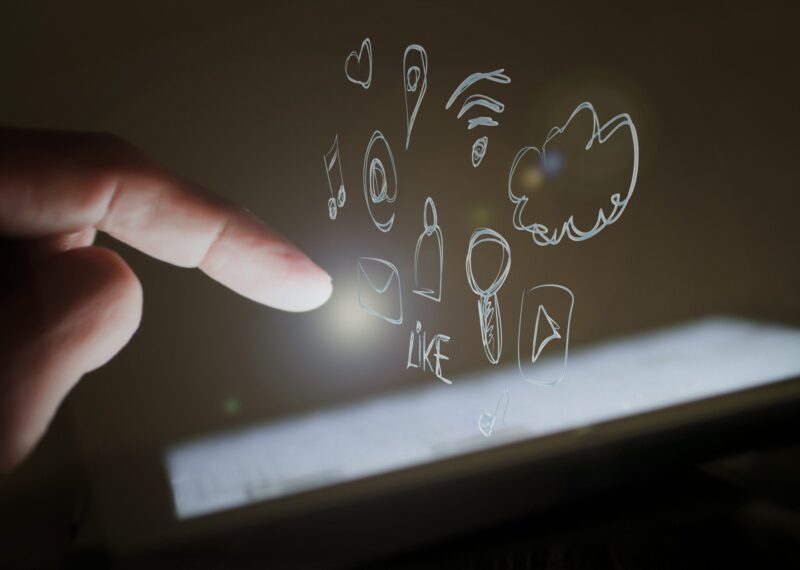
Finally, while it seems second nature to like and share viral content on social media, we need to understand that as Muslims we are accountable for all our actions.
While a video that is viral may seem funny, or perhaps expose a different side of a person, we must think about the impact of such videos may have on the person within the video, and to ourselves. The prophet s.a.w. once said: “Whosoever covers the imperfections (‘aib) of another Muslim, Allah will cover his imperfections in this world and the hereafter” (Narrated by Ibn Majah).
Thus, before spreading the next viral video, ask the following question: do we want our own imperfections shown to everyone?
Why not viral our article instead?Share it with your friends and family so they can benefit too! Follow us on Instagram, Subscribe to our channel on YouTube, and like our Facebook page today!